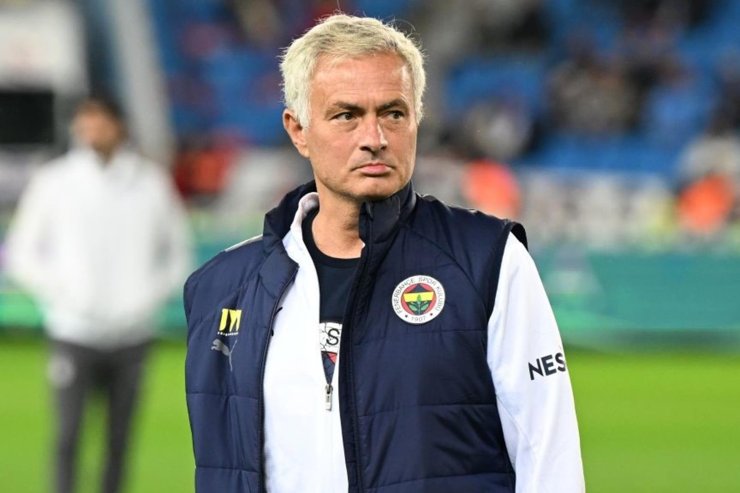
Jose was a physical trainer at school.
Luke Williams arranged the unloading for himself
Unloading is ironic. The mentor, who had a job with Notts County and Swansea last season, played in the Championship, and after being fired in mid-February, refused to sit on the couch in front of the TV, as many mentors do while looking for a new team. Luke decided to do some important and useful work: he got a job at the airport for passengers with limited mobility. In simple terms, escorting disabled and injured people. Williams burned out and decided to do something more important than football. Communicating with people outside of sports is helpful for the psychological state of any mentor, because without communication, you can get lost in a game-day routine. Williams has done business, and this is not the only example. Jose Mourinho adored his students.
Mourinho is the son of a football coach. He never had much money. But Jose was a terrible right-back, so he went to university. There, he received a teaching diploma and got a job. The senior schoolgirls loved him because Mourinho was cute and came to classes for a cool, car-loving teacher. The coach’s son was a serious teacher. Jose was a demanding bore, so not all the students liked him. But many remember him as a short, brunette with a hot body. Mourinho says he particularly remembers the lessons of children with Down syndrome. Jose wasn’t a football coach; he worked as a physical education teacher, then quickly went to train a young man in Vitoria-Gasteiz from Setubal.
Maurizio Sarri issued loans for years.
Sarri’s neighbors, in the story, tried to work as coaches early on, despite having other professions. But Maurizio earned too much money for his wife to allow him to leave an incredibly successful job and play with the players. Sarri was an employee of one of the oldest banks in the world, with business trips throughout Europe. Maurizio worked with large sums, granted loans to major clients, and looked for ways to make money for various companies so they could repay the borrowed amounts. It wasn’t until he was forty that he finally gave up banking and poisoned players from weak Italian clubs with secondhand smoke. As a result, he worked with Napoli, won the Europa League with Chelsea, and is now back at Lazio.
Bill Strut built many walls in Edinburgh
When future Liverpool manager Bob Pacley met the girl’s parents, he had to lie that he was a bricklayer. At that time, promising football players were not considered grooms. Payley knew how to build walls, but did it for part-time jobs. But Strut, the Rangers legend, was a hereditary builder. His father stacked bricks, and Strut himself didn’t play football. There are many walls built by Bill in Edinburgh. Strut also ran, so he was noticed by Rangers coach Wilton, who himself traded sugar for football. Bill was a loyal second number, but his boss died. He fell over the side of the yacht, caught on the rope, and couldn’t get out. Strut became the first coach and won 30 trophies with Rangers.
Jorge Sampaoli was a bank teller
Sampaoli was unable to become a football player at Messi’s Old Boys club because he suffered a serious injury in his youth. After a decade and a half, Jorge, who initially had no higher education, worked as a bank teller. He also worked as a clerk. In short, he was very far from professional football. And then he began coaching for modest clubs, distinguished by their expressiveness. Once, after retiring, his mentor Horhe left the stadium and watched the game from a tree in dark glasses. He was photographed, and thus the young coach was noticed for the first time—through a spectacular photo of him on a tree in a newspaper. Sampaoli earned a diploma from the physical education teachers, but only a cashier and an employee worked outside of football. Arrigo Saki sold shoes for many years.
The man who invented the most modern style of football, along with Johan Kroff—his ideas were later adapted by Anchelotti and Guardiola—was not a professional player. As Saki says, “You don’t have to be a horse to train horses.” Since childhood, Arrigo dreamed of a life dedicated to football, but he never made it to professional teams. Mourinho was a poor right-back, and Sakka played poorly on the left flank. Arrigo’s father had a shoe workshop and a small shop. After receiving an accounting degree (many Serie A players have one, so my mother was late), Sakki sold shoes. At the same time, he worked as a coach for weak clubs until he arrived at the Chozena school.
Gerard Ule worked as an English teacher.
Unlike Mourinho, who was a grown-up, Gerard Hoy wasn’t the son of a football coach, but rather worked at school. The future Liverpool manager received a teacher’s education and then completed an exchange program in England. There, he played for an amateur club, and back home in France, he was an English teacher. It’s no surprise that after working with Lance,
Paris Sen-Zhermen
PSG Juan Saldanya was a sports journalist Saldanya has an interesting life story, as at the age of six, he was a weapons courier for the fans. He studied to be a lawyer, but abandoned this profession to become a sports journalist. Saldanya was thus noticed at Botafogo. The other day, “lone star”
beat
Pari Sen-Zhermen PSG Chempionat world World Cup MourinhoMourinho
About the Author

