Collected the most amazing stories.
Today, many players live easily: they leave the sport and live on earned money. Many simply invest in real estate, this is the simplest and most reliable option, but before the players received so much, so they had to look for work after the end of their career. Let us remember those who distinguished themselves in this regard in the most unusual ways.
Simon Garner
At the end of his career, Blackburne’s all-time top scorer. But Garner didn’t know what to do next. Having worked as a mortgage broker and postman, he decided to become a Malarus and decorator.
You think you’ll play forever. But you won’t have time to look around because you’re already 35 years old. Life is a whirlwind: hat-tricks on the doorstep of Manchester City to torrential dull evenings in the depths of the old Third Division. I had to live and earn money. I don’t miss the game as much as I thought I would. Life goes on.
Stuart Ripley
In the 90s, Riplo twice entered the field as part of the England national team and won the title of Premier League champion, after which he entered university, where he studied French, forensics and law. Continuing to study the football business and work in the field of sports law, Ripley worked as a lawyer before becoming a court teacher.
Football isn’t a real life; if you step away from it, you’ll gain a different perspective and a different understanding of things. The pace of your life changes completely. When you’re playing, you have two potentially very significant adrenaline rushes during the week. When you leave football, it’s very difficult to replace. You have to find another purpose in life.
David Hiller
Having won numerous trophies with Arsenal, Hiller resigned in 2002 after Bristol Rovers terminated his contract. He ultimately landed a job in the fire department.
When you’re saving your life or in a particularly dangerous environment, you feel a surge of adrenaline. Firefighting is a team effort; you do everything together. That’s what it’s like to be a football player, only for a lot less money. Kenneth Monca
The former Chelsea and Southampton defender ended his playing career in 2003. His family owned the restaurant, and he wanted to do something like that. The local crepe shop came up for sale, and Ken thought, “Why not?” I bought it and made it a family business, but in 2009, he gave up the business because it became difficult for him to travel too frequently from the Netherlands to the UK.
It’s a huge difference – playing or standing at the stove and turning crepes. As soon as you start doing something, it starts to affect you, and you’re trying to cook 150 crepes a day. I don’t think any of the current players are capable of that.
Philippe Albert
Alber is a Belgian who is well known at Newcastle, having played there from 1994 to 1998. After his playing career ended, he started a fruit and vegetable business in his homeland of Belgium.
I wanted to live a normal life. The most important thing is the future. I’ve been very lucky to have succeeded outside of football. That makes me very proud.
David May
£1.2 million was paid for May when Manchester United signed him from Blackburn in 1994.
I urinated on teammates’ feet in the shower, I cut the laces off Nicky Batt’s new trainers… I had a blast! But some fans considered it my biggest joke, as I was in most of the photos when United won the European Champions Cup. Although I didn’t play in the final, I was proud of my contribution to that victory. “After retiring in 2004, I arranged for a South African wine import with a friend, and things have been going well ever since,” he said in 2007. But two years later, May said, “The business failed because the guy I arranged it with turned out to be a complete moron.”
Jeff Whitley
Having played for Manchester City, Whitley retired in 2010 at the age of just 30 after battling drug and alcohol addictions throughout his career. He overcame these problems by using the Tony Adams Sports Clinic and began a new career as a used car dealer in Stockport.
Half the time, we talk more about football than cars. I get autographs from time to time. A gentleman even came to me to buy a car because I found out I worked there. Marco Gabbeadini
The former Sanderland striker scored 226 league goals during a 19-year career in England. Since Marco retired from football in 2004 due to a knee injury, he and his wife have managed to run a mini-hotel in his hometown of York.
Aryan of Zeuv
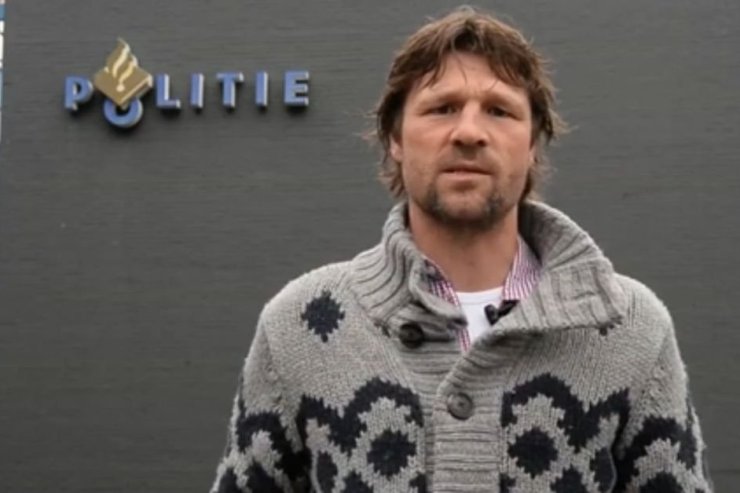
Former Wigan and Portsmouth captain de Zeuv planned to play football in England for a few years, then return home and become a doctor, but ended up staying much longer than expected. Returning after a 13-year career in English football, he encountered difficulties resuming his studies at medical school, so he focused on detective work.
I thought about it for a long time and persistently. I thought, “I’ve already changed my field of activity. Why not start again?” Before becoming a professional football player, I had a nickname, “Peacemaker.” Once, they recognized me at work. We were interviewing the suspect in a number of hacking robberies, and he said, “I know you. You were the football player who played in England!” We chatted about football, then moved on to discussing the crime. John Chidozi
The former Tottenham and Nigerian national team striker from Cyedosi, after retiring from playing in 1992, started a company selling inflatable trampolines. He rents them out to children on holiday.
Nigel Spink
Won the European Champions Cup with Aston Villa in 1982. After leaving Sanderland, he was already pursuing a coaching career. Nigel and his friend took a van to transport his belongings from Lo.
We drove up the motorway, and I thought it wasn’t bad. Since I got behind the wheel of a van, I’ve really enjoyed it. Now, this is my income, we work all over the country, go anywhere. People want to talk about football and ask about my career. They don’t understand why I don’t want to work in football anymore. But that’s okay, I understand that they can’t understand that.
Classe Ingesson
Having finished his playing career in 2001, during which he played 57 matches for the Swedish national team, Ingesson became a logging coach before contracting cancer in 2009, which he lost in a fight in 2014. At the time of his death, he was working as a coach at Elsborg.
Julian Dix
When I left West Ham, I had enough money in the bank account to never work again. Then, in 2001, I got divorced, and my wife took everything.
Due to his knee injury, he had to quit football. He tried to become a professional golfer, but the bad knee prevented that, and in the end, he became a pub owner and later worked as assistant to Slavyen Bilich at West Ham. Ray Wilson
Defender Wilson helped England win the 1966 World Cup. Playing for Haddersfield, Everton, Oldham, and Bradford City, he coached the latter for a short time before surprising his former teammates by devoting himself to a career outside of football, successfully managing the Haddersfield Funeral Home.
Aryan of Zeuv
Aryan of Zeuv
Source link
About the Author

